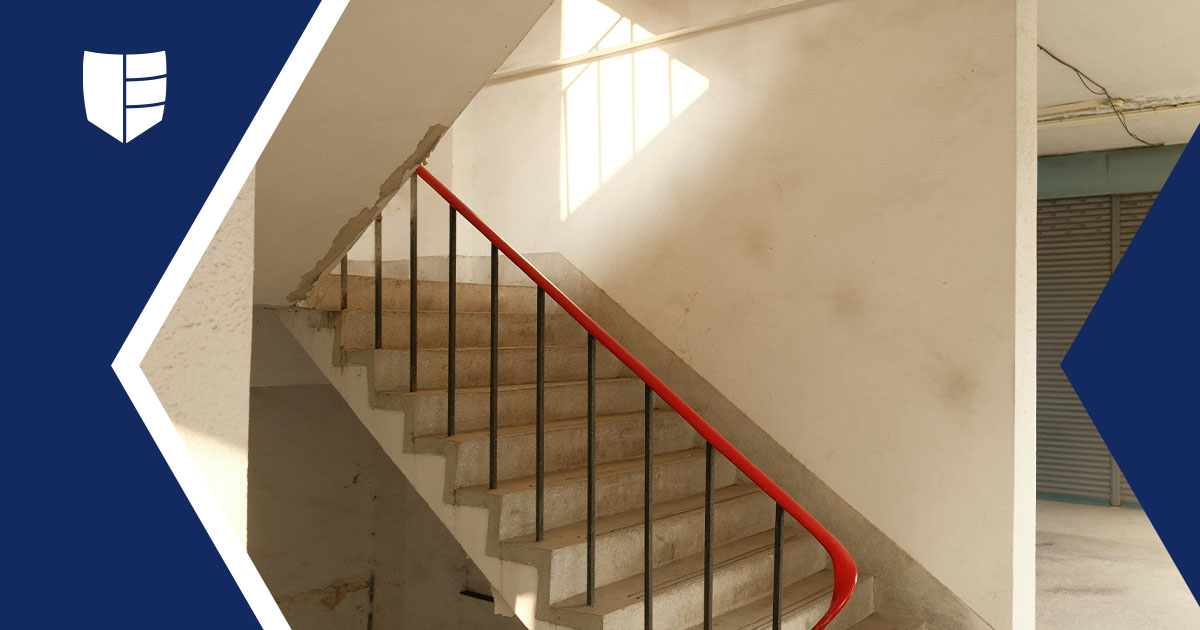
The bulb over the second-floor landing in your apartment building has been out nearly a month, and you’ve texted the property manager about it twice. Tonight, as you’re easing your way down the back stairwell with a laundry basket on your hip, feeling for the edge of each step with your toes, you miss the last one and your ankle folds under you. By morning, you’re in a walking boot and wondering who should pay for this.
It’s a bit of a quandary. Your rent goes to the management company. The building belongs to an LLC with an out-of-state mailing address, and the light should have been on an electrician’s work order by now. Washington law can reach all three, which is why a Seattle premises liability lawyer will want to know who controlled that stairwell before deciding whom to sue.
Why the Hallway Is the Landlord’s Problem
A common area is any part of a building that tenants and visitors share, and nobody rents outright, from the lobby and elevators to the laundry room and the path out to the dumpsters. You’re not allowed to rewire the stairwell light yourself, and your lease almost certainly forbids trying, so that responsibility falls on whoever controls those spaces.
For apartments, Washington’s Residential Landlord-Tenant Act spells it out, requiring landlords to keep shared or common areas reasonably clean, sanitary, and safe from defects that increase the hazards of fire or accident. The Washington Supreme Court sees a tenant crossing a common area as an invitee that is owed reasonable care. The court has also held that a tenant’s knowledge of a hazard doesn’t by itself let the landlord off the hook. This matters a lot if you complained about that dark stairwell for weeks before you fell on it. Office buildings and shopping centers fall outside that statute, but control still drives commercial building injury claims, and the lease’s common area maintenance clause is the place to check who is responsible to keep up the lobby and stairs.
Owner, Manager or Contractor: Who Answers for the Fall
Common area liability rarely stops at just one entity or company. It can include:
- The owner, which carries the legal duty to keep shared spaces reasonably safe
- The property management company, which takes the maintenance requests and decides what gets fixed first
- Contractors, like the cleaning crew, the electrician, or the elevator maintenance company
Property management negligence is a claim all its own. A manager who sat on three tenant-portal repair request tickets about a loose stair tread made a clear mistake, and you can name the management company alongside the owner. Contractors work the same way. If a slip and fall in a building lobby traces back to a cleaning crew that mopped at the 5 p.m. rush without setting up a warning cone, that company answers for its decision even though the owner hired it.
How Washington Splits the Blame
When several companies share responsibility for a fall, a Washington jury doesn’t have to pick just one. It assigns each entity a percentage of fault, including any share it pins on you. Each defendant normally pays only its own share, with two exceptions that come up constantly in shared buildings.
The first exception covers agents. An owner is responsible for the fault of anyone acting as its agent, which is how many property management companies operate. The second exception covers you, or the person who got hurt. If the jury finds you weren’t at fault at all, the defendants against whom judgment is entered become jointly and severally liable. This means you can collect the combined total from any one of them and leave them to sort out who owes whom.
Hiring out the work doesn’t always shift that duty, either. The Washington Supreme Court has said some duties cannot be handed off to a contractor, including duties created by statute, and an apartment owner’s duty to keep common areas safe comes straight from the landlord-tenant statute.
A defendant can also blame a company that nobody thought to sue. The jury can assign that absent company a share of the fault, shrinking what the defendants in the courtroom pay. That is the practical reason to identify every company with a hand in that darkened stairwell before you file.
The Paper Trail Inside a Shared Building
Common-area hazards tend to be slow ones, like a stairwell bulb that’s been burned out for weeks, a carpet runner curling at the top step, or an elevator door that closes too fast. Washington premises claim usually rise or fall on notice, meaning whether the owner knew about the problem or should have found it in time. The thing is that slow hazards tend to leave records behind.
Ask the property manager in writing for the maintenance history on the spot where you fell. Save every tenant-portal ticket and text you sent about it. Ask your neighbors whether they reported the same problem, because three tenants complaining about one loose stair tread is notice that’s hard to argue with. In Seattle, the city’s rental inspection checklist counts a common hallway, stairway, or laundry room without a working light fixture as a failed item, so there could be a public record of the problem from before you ever had your accident.
Sorting Out Who Pays Is Our Job
At Law Offices of Justin R. Boland, PLLC, we chase down the contracts and maintenance records that show which companies controlled the space where you fell, and we work to account for every one of them before a jury starts dividing up fault.
Justin R. Boland began his career as a prosecutor in Snohomish County and later served as a trial prosecutor with the U.S. Department of Justice. If you were injured in an apartment hallway, a lobby, or a stairwell, reach out to our firm for a free consultation, and bring your lease and every maintenance request you sent about the spot where you fell.