Let’s face it… Seattle is a slippery city. There is an average of 156 measurable rainy days.
That means nearly half the year brings wet streets and sidewalks. A lot of that rain also makes it onto the floors of grocery stores, restaurants, and other venues, making them very dangerous places. Unfortunately, rain isn’t the only thing that makes a property dangerous.
Many potential hazards can lead to a slip and fall accident. In some cases, that is an unfortunate but unavoidable accident. However, in those situations where a property owner or their tenant did not take any actions to prevent the hazard, they can be held liable for your injuries. Proving that is another issue.
To hold a property owner accountable, you’ll need a strong legal advocate in your corner.
Having an experienced Seattle slip and fall attorney on your side can make all the difference between paying out of pocket and getting the person whose negligence led to your accident to pay for your financial losses.
Environmental Hazards That Lead to Serious Fall Injuries
In order to fortify your claim, you need to detail how your accident happened. A thorough investigation can reveal a history of neglect and inspection citations that can establish liability. It really comes down to when the hazard was created and who was responsible for fixing the problem.
First, you have to identify exactly what caused your fall. It will probably be one of these reasons:
- Loose rugs and mats: There might be unsecured edges or lack of non-slip backing on rugs and mats that catch feet and cause a sudden trip.
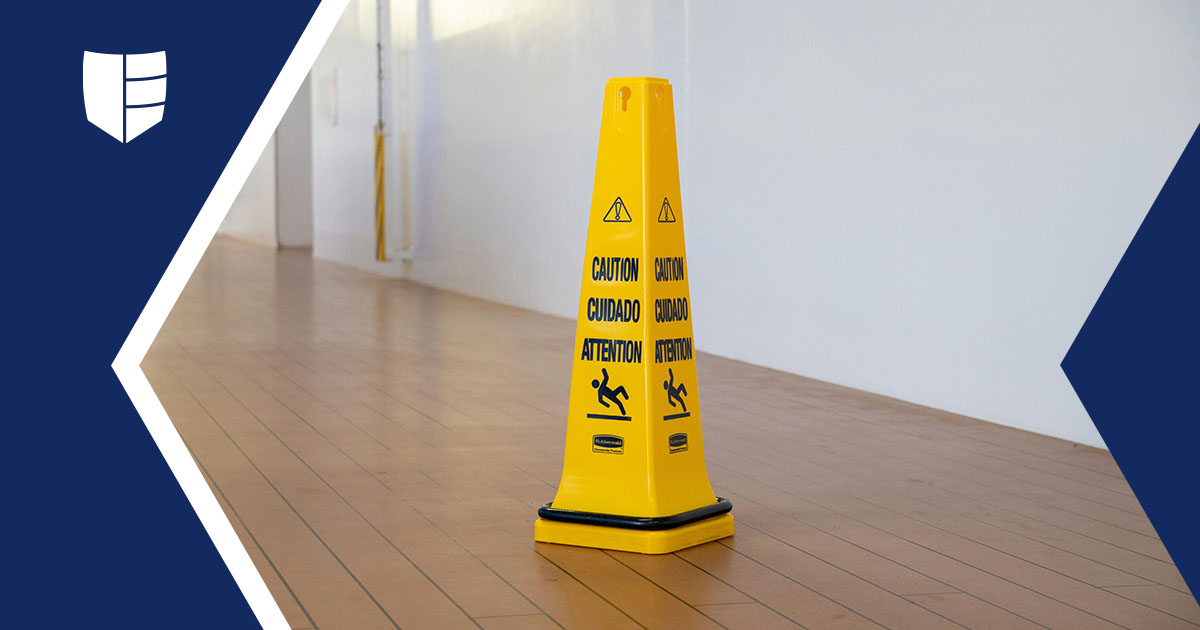
- Wet or slick surfaces: Spills and freshly waxed floors are common hazards in grocery stores where bottles of liquids are constantly falling off shelves. Freshly mopped bathrooms and hallways can also be a hazard. Safety protocols require warning signs to be put up, and failure to do so can be considered liable.
- Clutter and cords: During renovations and repairs, electrical wires, boxes, or stray objects that are left in walkways can block safe passage.
- Poor lighting: Dim bulbs or dark hallways obscure steps, thresholds, and changes in floor levels.
- Uneven pavement: A property owner’s responsibility extends to outside their property. Cracked sidewalks, broken steps, and crumbling concrete create hidden trip points.
- Weather elements: Ice, snow, and pooled rain make pathways slick and unpredictable.
- Debris: Piles of leaves, trash, or loose gravel hide the walking surface and reduce grip
Once you detail how your accident occurred, you can reverse engineer the events leading up to the incident.
The Role of Property Owner Negligence in Slip and Fall Cases
Slip and falls happen. It’s hard to imagine getting through life without at least a dozen of these types of accidents.
At home, you might have no one to blame but yourself when you slip in the bathroom or kitchen. Outside your home, it’s another story. When you slip and fall in business, you have to consider the actions of the property owner or their tenant to consider negligence.
Every owner and tenant has a legal obligation to keep their premises reasonably safe for lawful visitors. A tenant can be the store owner who is renting the building. In some cases, the lease agreement indemnifies the owner of the building from liability. That means your claim will be focused on the store owner and their management team and staff.
What you have to establish is causation and notice. You need to demonstrate the hazard directly caused your fall and that the owner knew or should have known about it.
Consider a bottle falling off a grocery store shelf. If you wander into the aisle minutes after the spill was created, the store staff might not have had time to put up signs to warn customers or clean up the spill. Is it reasonable to hold them accountable?
It depends on the situation, but you could certainly hold them partially to blame under Washington’s comparative negligence laws. That means you might be held partially to blame but still be able to recover compensation, just reduced by the amount of blame you’re assigned.
However, if there are preexisting hazards like cracked tiles, pulled-up carpeting, and uneven floorboards, the owner can be held completely responsible for injuries.
Evidence to Collect Immediately After a Fall on Dangerous Property
Right after your slip and fall accident, you might not be in any condition to take photos or videos of the scene, but you should try. You must also file a report with the management before you leave. It will be extremely difficult to create a claim days later unless there is other compelling evidence.
This is why you need to speak with an attorney right away. The Law Offices of Justin R. Boland, PLLC has helped many Seattle residents with this exact type of claim.
Just because you’re speaking with an attorney after this type of accident doesn’t mean you have to rush into a courtroom. What you need is to prevent any surveillance footage from being deleted or overwritten. We can immediately issue a letter to secure that evidence.
We can also help you gather other relevant information such as inspection reports from the property and any previous citations around the same issues that caused your fall. That can demonstrate a pattern of neglect. We’ll also work closely with you to determine the full scope of your damages. Our goal is to help you secure a settlement that is fair and timely.
If you or anyone in your family has been involved in a slip and fall accident, reach out to schedule a consultation. You don’t need to fight this battle alone.