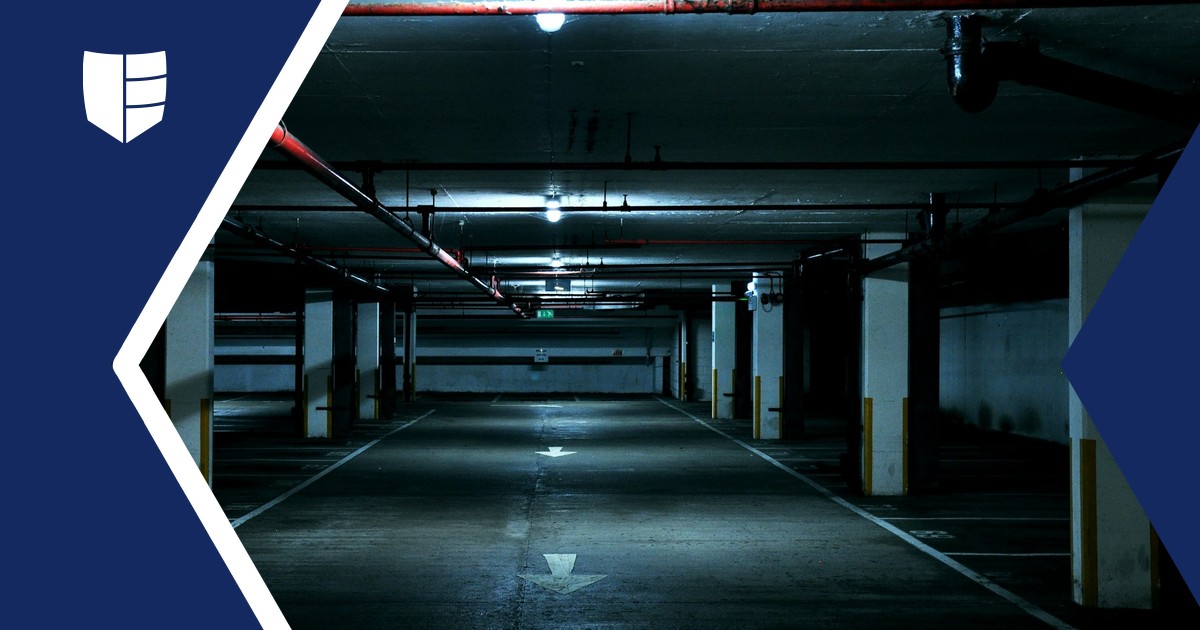
It’s 5:45 on a November evening in Seattle, and it’s been dark for more than an hour.
The light over the stairwell door on level 3 of the garage has been flickering since the middle of summer. You take the stairs because the elevator’s usually out, and you need the steps anyway. But on this night, a man waiting in the corner by the door grabs your bag.
When you don’t let it go, he shoves you down half a flight of concrete steps.
Police might find the attacker eventually. But your medical bills won’t wait, and he probably couldn’t pay them anyway. But the company that owns that garage can. If the owner had good reason to fix that stairwell and didn’t, a negligent security claim could let you recover from the owner.
The Garage Owner Isn’t Your Bodyguard
Washington doesn’t make a business the insurer of everyone who parks there.
However, it does expect a garage owner to take reasonable steps against crime it should see coming. Citywide crime numbers alone won’t prove that foreseeability. The Washington Supreme Court has said the usual proof is a history of similar crimes at that property, recent enough and frequent enough to put the owner on notice.
Most garages have a history, and most of it is car prowls, the smashed windows every Seattle driver has learned to live with. Let’s say this garage had a dozen break-ins last fall.
The owner’s lawyers will argue that broken car windows aren’t a loud enough warning that a person could be attacked in a stairwell. Your lawyer will scan for incidents closer to yours, like a robbery at the pay station or complaints about a shady-looking person hanging around level 3.
A Garage Is Built With Hiding Places
Concrete pillars block sight lines. Stairwells are walled off from the parking floors. And an elevator lobby on one level is hidden from the level below. Every garage has those blind spots, so the question is what the owner did to make up for them.
A lawyer usually looks at the lights first, because inadequate lighting in parking garages is easy to document and hard for an owner to explain. A burned-out fixture over a stairwell door, motion-sensor lights that come on too late, or a level left dark to save on power can all give someone a place to wait without being seen. A camera that’s been broken for months doesn’t scare anyone off, and it records nothing a jury can watch later.
A pedestrian door propped open with a rock or a stairwell door that won’t latch lets anyone in off the street. A broken elevator pushes people into the stairwells, which is where the man in our example was waiting. There’s no single set of parking lot security standards in Washington law.
Courts ask what a reasonable owner would have done, and a lighting consultant can measure the garage door against published industry guidelines.
The Proof Is in the Garage’s Own Paperwork
Most of the proof you’ll need belongs to the owner of the company that runs the garage. You probably can’t ask for it, but your lawyer will send a written letter asking them to keep it. Video comes first, because many systems record over themselves on a loop, sometimes within days. Your lawyer will also ask for:
- Maintenance logs showing when the stairwell light failed and when someone reported it
- Security patrol logs and call box test records
- Incident reports and emails about earlier crimes in the garage
You can request your own incident report from the Seattle Police Department. The department’s crime data and 911 call records can also show what else has been reported near that address.
The Criminal Case Won’t Pay Your Bills
The man who shoved you might get charged, but that case belongs to the state. If he’s convicted, a judge can order restitution for medical bills and lost wages. It still won’t cover pain and suffering, though, and someone who robs people in a garage isn’t likely to have much to pay with.
A civil claim against the garage owner runs on a separate track. It doesn’t depend on an arrest or conviction. It can also cover your pain and suffering, including the fear that keeps you out of every garage in the city for months.
Meanwhile, Washington’s Crime Victims Compensation Program, run by the Department of Labor & Industries, can pay for medical care, counseling, and part of your lost wages after a felony or gross misdemeanor. You have to report the crime to police within a year and apply within three years of that report.
It’s a separate source of compensation for crime victims, and your lawyer can sort out how it fits with your claim against the owner.
Talk to Us Before the Video Loops Over
A garage owner can’t stop every crime, and Washington doesn’t ask them to. But they can’t leave a stairwell dark for months after the warnings came in and call what happened there “bad luck.” At Law Offices of Justin R. Boland, PLLC, we pursue maintenance logs, early incident reports, and video before they disappear. We also deal with the insurance company while you recover. Justin R. Boland began his career as a prosecutor in Snohomish County and with the U.S. Department of Justice.
If you were attacked or robbed in a Seattle parking garage, reach out to our firm for a free consultation with a Seattle premises liability lawyer. Bring the police report number, any photos of the lights or doors, and the garage name from your parking receipt, and we’ll start requesting the video while it’s still available.